
Enabling Continuity Through Change
Stepped into an Interim Program Manager role during a period of leadership disruption, leading communication strategy, stakeholder engagement, and team coordination to restore continuity and trust in a youth-facing program.
Designed and implemented internal and external communication systems, clarified messaging, and introduced operational structure to reduce risk and support sustainable growth.
Context
The organization supported adolescents and families through a long-standing program but experienced two consecutive leadership transitions, including during the pandemic, putting participation and continuity at risk.
This resulted in:
- Erosion of trust among stakeholders (participants, families, broader community)
- Fragmented internal communications and unclear leadership roles
- Inconsistent messaging and reliance on informal knowledge
- Limited governance in a duty-of-care environment
Role
Appointed as Interim Program Manager with a formal mandate and budget oversight. Led a team of youth program leaders (direct reports) and built a volunteer support team to enable program delivery. Responsible for communication strategy, stakeholder alignment, team leadership, and operational oversight, ensuring consistency across leaders, participants, and volunteers.
Challenge
The core issue centered on rebuilding trust through consistent communication, as the programming itself was strong.
- Reactive and inconsistent stakeholder communication with participants and families
- Lack of shared messaging and audience clarity across leaders
- Operational fragility in a duty-of-care environment
- Dependence on individual knowledge rather than shared systems
Required introducing structure without resistance and enabling adoption within a volunteer-based team.
Approach
Communication Strategy & Leadership Alignment
- Established a clear communication strategy to stabilize the program
- Introduced structured planning to align leaders on messaging, roles, and expectations
Internal Communications & Messaging Consistency
- Built repeatable internal communication rhythms for planning and execution
- Developed communication templates, messaging guides, and scripts
- Clarified roles and responsibilities to ensure consistent delivery
Stakeholder Communication (Families)
- Shifted from reactive updates to proactive, structured stakeholder communication
- Established a consistent communication cadence to improve clarity and predictability
- Introduced clear messaging around program purpose, leadership structure, and expectations
Team Leadership, Development & Ownership
- Led and coached program leaders, establishing clear expectations and accountability
- Rotated leaders through roles to identify strengths, build capability, and increase engagement
- Encouraged ownership of initiatives, enabling leaders to plan and deliver their own programming
- Built and coordinated a volunteer support team, fostering ownership (e.g., volunteer-led events)
- Introduced simple systems to manage scheduling, responsibilities, and follow-through
Governance & Risk Communication
- Implemented onboarding, background checks, and youth-specific policies
- Documented and communicated expectations for supervision and off-site activities
- Aligned operational practices with clearly communicated standards
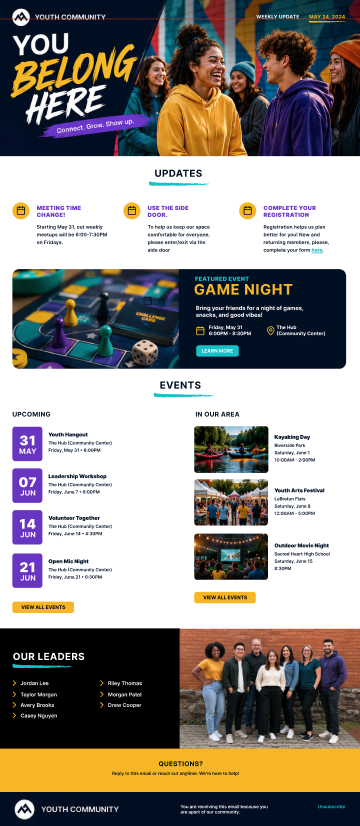
From Inconsistent Updates
to Structured Weekly Communication
Before
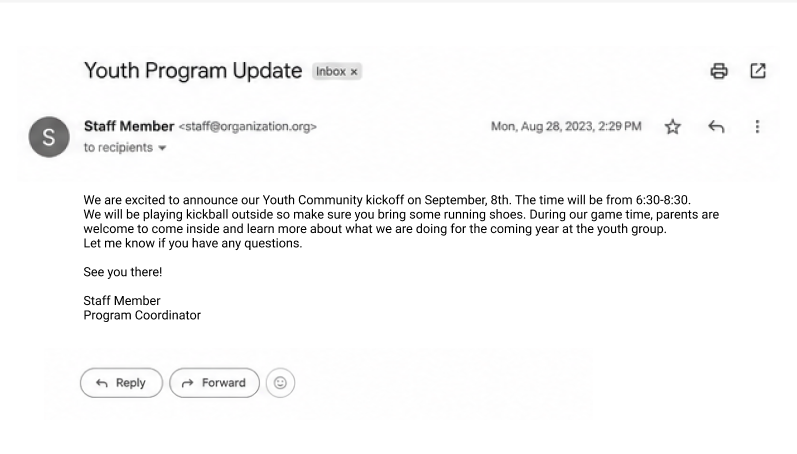
Communication shifted from inconsistent, minimal updates to a structured weekly system that improved clarity and engagement.
After
Systems for Consistency and Coordination
Standardized templates ensured consistent weekly delivery, clarified roles, and strengthened coordination across leaders.
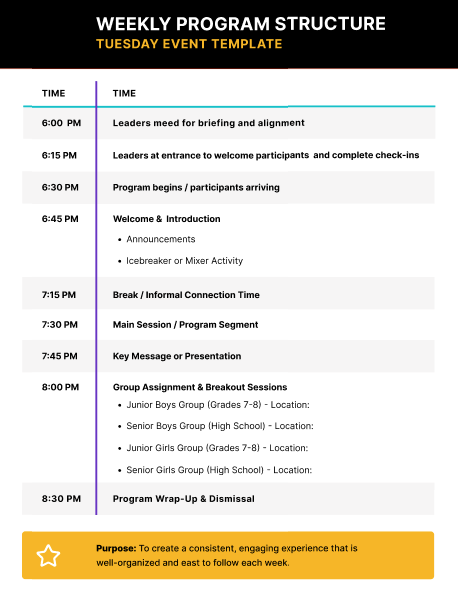
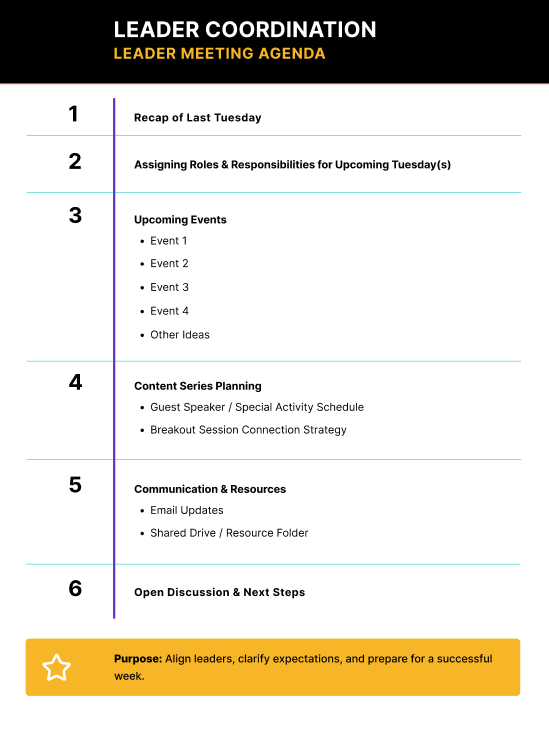
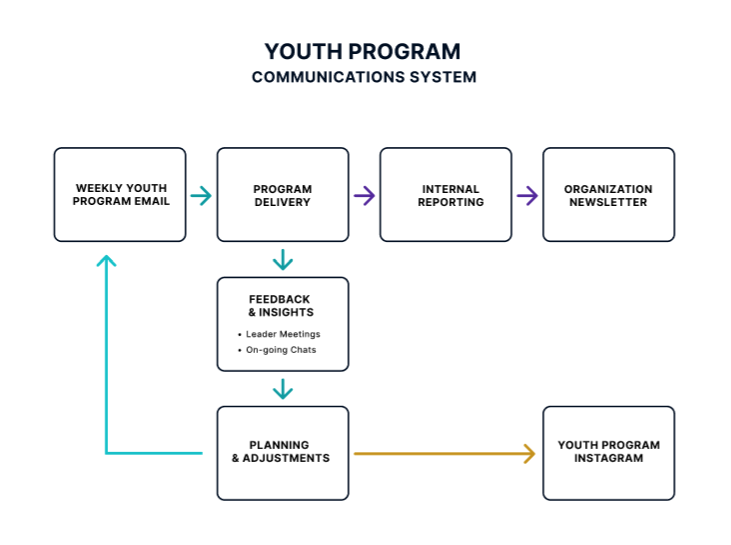
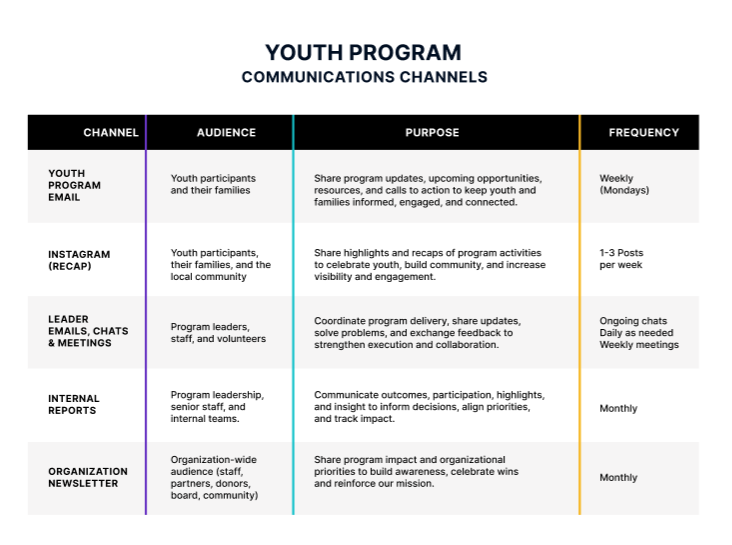
Communication System and Channels
Communication was structured as a system, not a series of isolated channels. Each touchpoint served a distinct purpose, with weekly communication driving execution, leadership coordination shaping decisions, and internal reporting extending visibility across the organization. Together, this created a consistent, connected flow that supported both delivery and continuous improvement.
Results
- 150%+ increase in participation within 6 months
- Rebuilt stakeholder trust and engagement through consistent, transparent communication
- Established clear internal communication practices across leadership and volunteers
- Increased leadership capability and engagement through ownership and role clarity
- Reduced operational risk through documented governance and shared systems
- Successfully onboarded a full-time staff role into a stable, structured program
Key Takeaway
Effective communication strategy, combined with strong team leadership and clear ownership, can restore trust and stability in complex environments. Clear messaging, consistent stakeholder communication, and empowered teams enabled continuity beyond any single leader.