
Transforming Internal Engagement
Led the communication strategy and system design for MBNA Canada’s United Way campaign, transforming a historically ad-hoc, word-of-mouth effort into a structured, organization-wide engagement campaign.
By introducing a centralized information system and coordinated internal communications strategy, the campaign achieved the highest fundraising total in MBNA Canada’s history, significantly exceeding previous benchmarks.
Context
MBNA Canada had an established reputation as a strong United Way supporter. However, previous campaigns relied heavily on:
- informal communication
- word-of-mouth coordination
- inconsistent manager involvement
- fragmented information sharing
Participation depended largely on individual initiative rather than a structured communication approach. At the same time, the organization aimed to increase engagement and impact while operating within a regulated financial environment, requiring:
- accurate and compliant messaging
- alignment with corporate communication standards
- coordination across departments and roles
A vision for a more impactful campaign was brought forward by the Community Relations Manager. This work translated that vision into a scalable communication strategy.
Role
Served in a lead communications role, responsible for translating campaign vision into a structured communication strategy and delivery system. Responsible for leading:
- Communication strategy and campaign planning
- Information architecture and centralized content system
- Internal communication cadence and messaging
- Alignment across leadership, organizers, and employees
Challenge
The core challenge was enabling participation at scale through clarity and structure.
- Information was fragmented and inconsistent
- Employees lacked clear guidance on how to participate
- Processes (donation, volunteering, tax claims) were unclear
- Engagement relied on informal explanation rather than accessible systems
To significantly increase participation, the campaign needed to move from:
informal coordination → intentional communication system
Approach
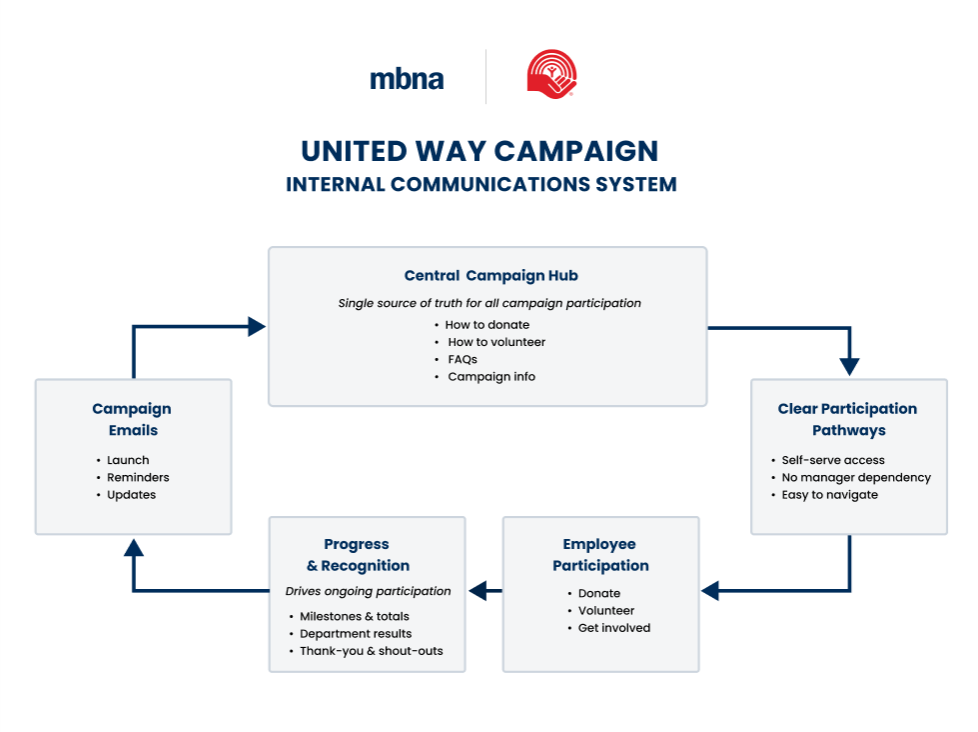
Centralized Information System (Intranet Hub)
- Designed and launched a dedicated intranet site as a single source of truth
- Consolidated all campaign information:
- how to donate
- how to volunteer
- tax and contribution details
- departmental participation
- timelines and FAQs
- Ensured clarity, accessibility, and ease of navigation
Internal Communications Campaign (Email Strategy)
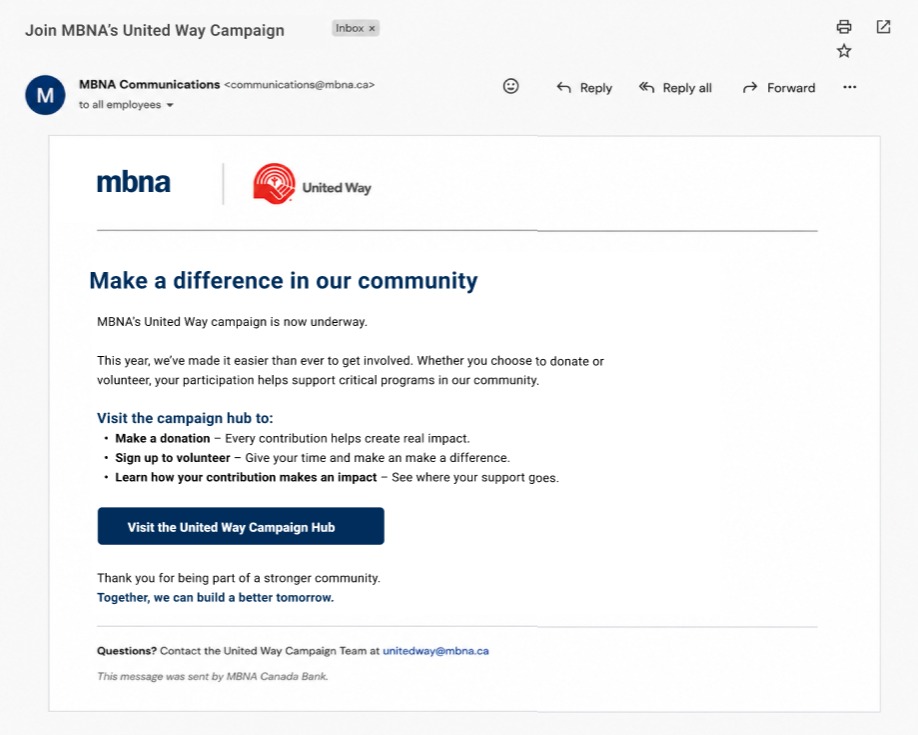
- Developed and executed a structured internal email campaign
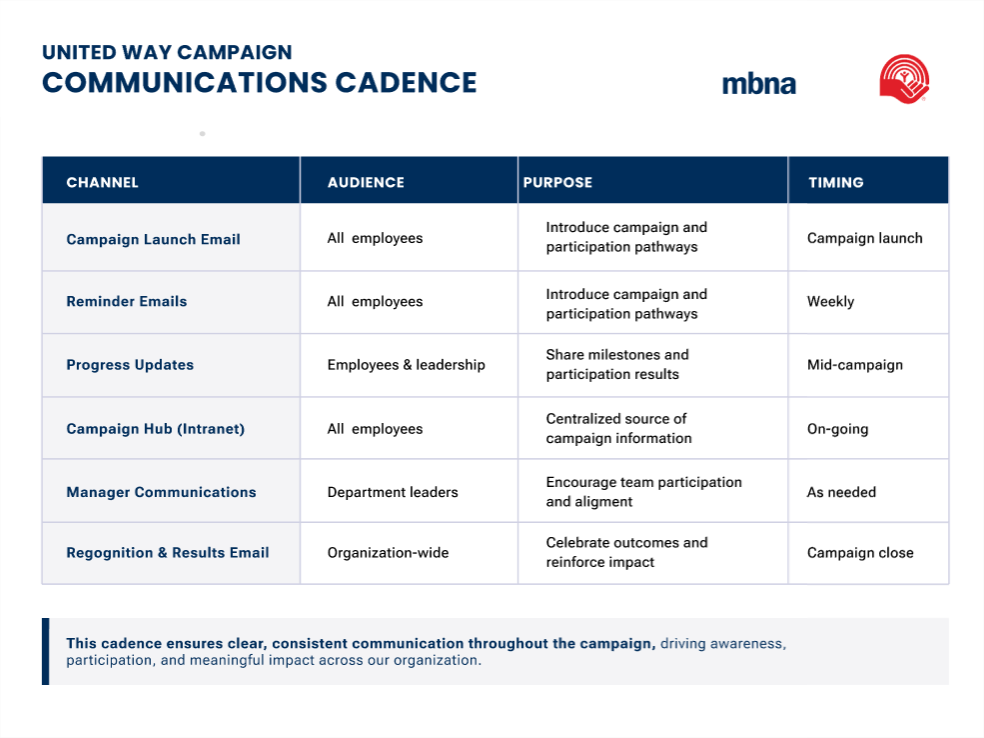
- Established a clear communication cadence:
- campaign launch
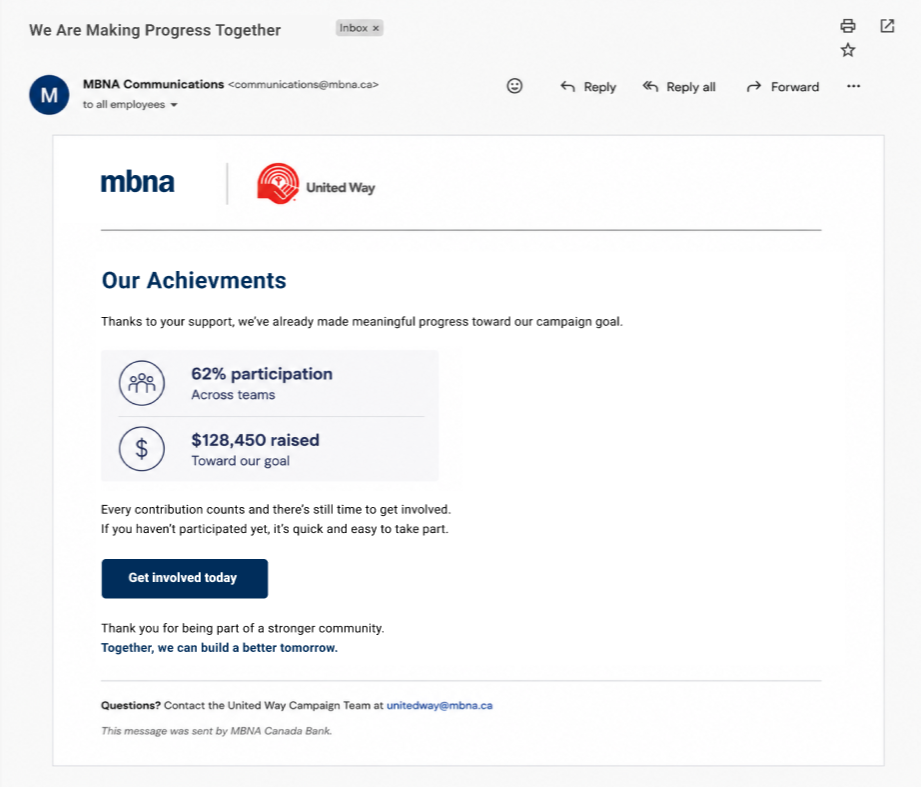
- reminders and updates
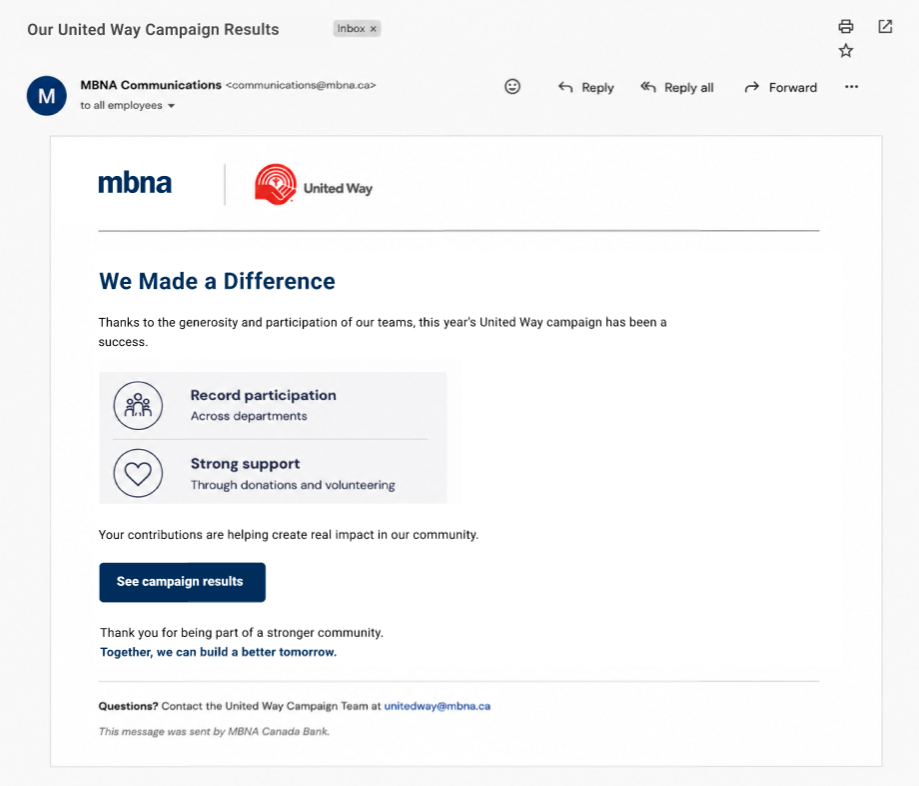
- milestone and achievement announcements
- Reinforced messaging consistently across all communications
Campaign Engagement & Momentum
- Used communication to build awareness, participation, and momentum over time
- Highlighted progress and celebrated achievements to sustain engagement
- Ensured messaging remained clear, motivating, and aligned
Friction Reduction & Usability
- Designed systems to eliminate confusion and reduce reliance on individual explanation
- Enabled employees to quickly understand how to participate and take action
- Prioritized clarity, predictability, and accessibility
Centralized Communication Structure
To reduce confusion and increase participation, a centralized communication system was created to align campaign messaging, simplify participation pathways, and create a consistent employee experience across the organization.
Structured Communication Cadence
A coordinated internal email campaign was developed to support awareness, reinforce participation, maintain momentum, and communicate campaign progress throughout the initiative.
Coordinated Participation & Reinforcement
Communication timing and channel coordination were structured to maintain visibility, reinforce participation, and sustain momentum throughout the campaign lifecycle.
Results
- Highest United Way campaign total in MBNA Canada history
- Significant increase in employee participation and engagement
- Reduced confusion and reliance on informal communication
- Established a scalable communication model for future campaigns
- Recognized with MBNA’s “Making a Difference in the Community” Award
In addition, the Community Relations Manager was formally recognized by the United Way at Ottawa City Hall, reflecting the broader impact of the campaign.
Key Takeaway
Transformational results are driven by communication systems, not just intent. By replacing informal coordination with a clear, centralized communication strategy, the campaign enabled participation at scale and demonstrated how structure, clarity, and consistency can significantly amplify engagement and impact.